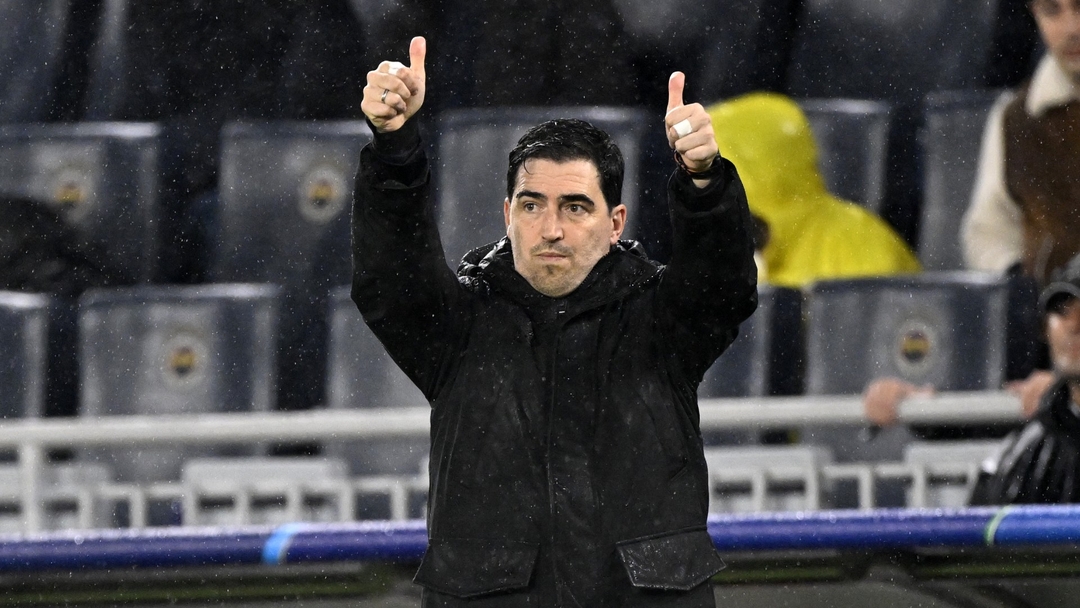

Pierre Sage’s impressive reputation in France has quickly been replaced by mounting pressure at Crystal Palace. The 47-year-old arrived at Selhurst Park after guiding Lens to the Coupe de France and their joint-best Ligue 1 finish in more than 20 years, achievements that also earned him last season’s Ligue 1 Manager of the Year award. However, after fewer than 10 Premier League matches, he is already among the leading candidates to lose his job.
Palace are in the relegation zone and have the division’s worst defensive record. Three consecutive league defeats, nine goals conceded and none scored have intensified the scrutiny, while Sunday’s meeting with Liverpool could leave the Eagles bottom if they lose. Yet the problems facing Sage go beyond the head coach, with supporters aware that a managerial change alone may not resolve the club’s wider difficulties.
The departures of Daniel Munoz and Maxence Lacroix have been particularly damaging. Their replacements have struggled to reproduce their influence, with Anan Khalaili creating chances at roughly half Munoz’s rate and Axel Disasi winning 54 per cent of his aerial duels. Palace have also conceded five goals from set pieces, a total surpassed only by Disasi’s parent club, Chelsea. The club have also had to cope with the earlier losses of Marc Guehi, Eberechi Eze and Michael Olise, leaving a significant portion of the squad’s previous quality to replace.
Sage has also been deprived of Ismaila Sarr, who scored 21 goals in 45 appearances last season and is now sidelined by a recurrence of a groin problem. Palace’s scoring rate fell sharply when Sarr was unavailable last season, while Jean-Philippe Mateta has played only a small portion of the league campaign under Sage. Mateta then received a red card 13 minutes into his second Premier League start since August and will miss the next three matches.
Adam Wharton’s decline in form has added to the manager’s problems. The midfielder averaged more than three ball recoveries in the middle third over the previous two seasons, but that figure has dropped to just above one. The absences of Sarr and Munoz have also reduced the number of options available when Wharton looks to play forward passes.
There is also a question over whether Sage’s football is suited to the squad he inherited. His Lens team relied on aggressive pressing, high turnovers and quick transitions, while Palace have traditionally operated more effectively as a counter-attacking side. Lens produced the second-highest number of high turnovers ending in a shot in Ligue 1 last season; Palace have recorded the fewest in the Premier League this campaign. Sage’s preference for controlling matches through possession has not yet translated to results, with Palace winning the possession battle only twice since his arrival. The current struggles therefore raise a broader issue: Sage may be a talented manager whose methods and the present Palace squad are simply proving difficult to align.